Team Name: Capybara
Team members: Ruolin Huang, Luyu You, Han Bao, Ancen Lyu, Jinru Qiu, Yixiao An, Wanyun Liu, Yenchen Lee, Chenhao Zhu, Boning Yang
Team Blog: https://medium.com/@capybara.group6
Duration: Aug. 2. 2022 - Sep. 2. 2022
My role: UI/UX designer


Pinpoints two fundamental privacy problems:
● Complicated & obscure privacy agreements
● Do not know how to operate to eliminate those risks.
Solves them using three features:
● Simplified versions of privacy terms.
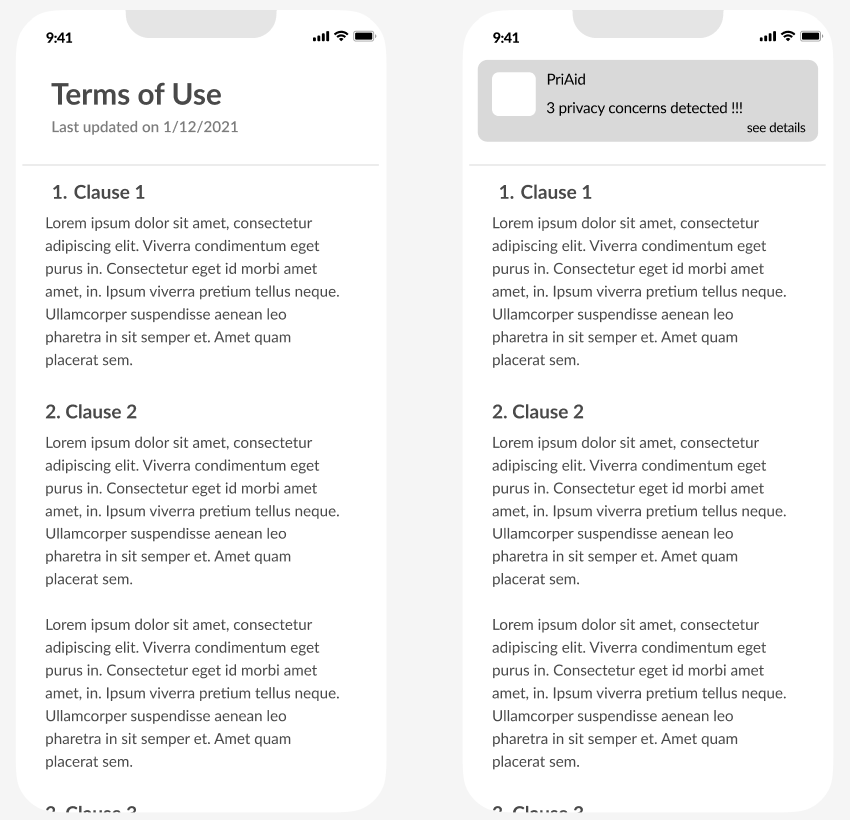
● Privacy issues scanning and notifications.
● Direct operation channel to change device settings
Additional value:
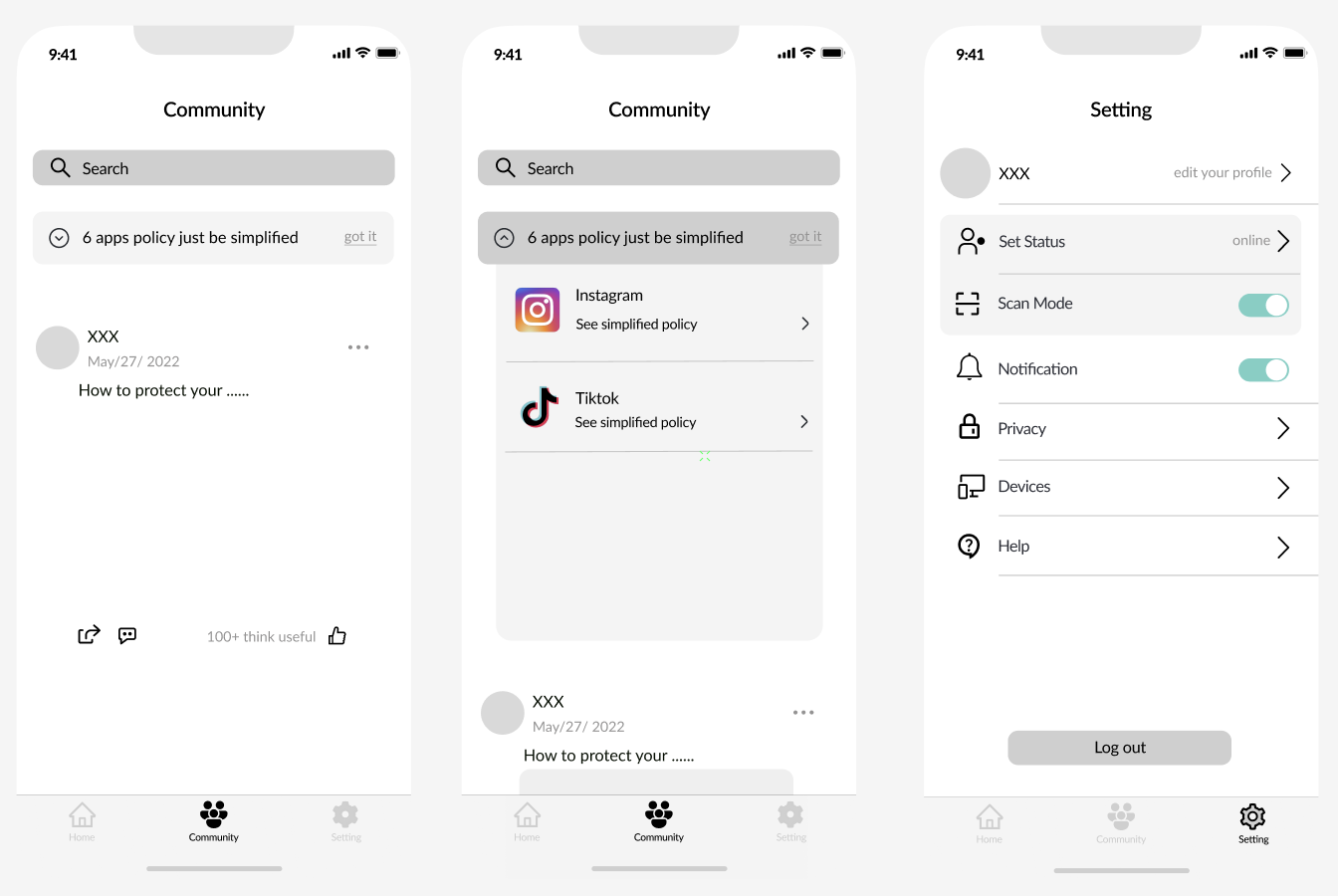
● An online community discussing and support each other on privacy issues.
Problem:
Lots of applications and websites have privacy agreements and cookie collecting agreements, but because they are long and complex to read, most users choose to accept them without reading through them, which can cause some risks to their personal information, since some of these privacy agreements state that the company might sell users’ information to advertise if users accept them.
Solution:
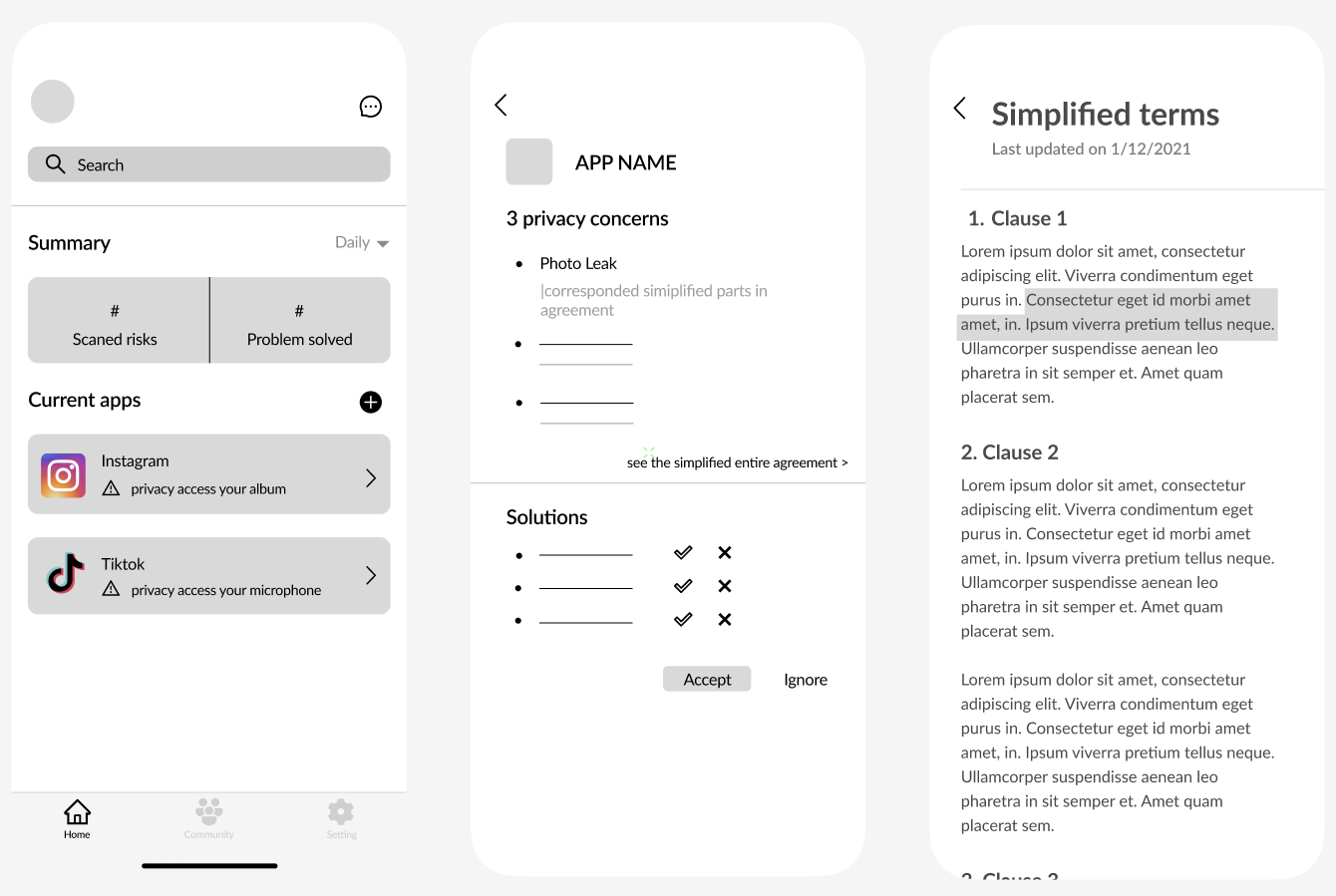
PriAid is an application that protect users' privacy on the internet. It summarizes the privacy agreements of all the apps and websites and it highlights the sentences in the privacy agreements if them have potential risks to users' privacy, and it also provides solutions with different safety levels to all the specific problems to help the users to protect their privacy.
PriAid also provides a platform for law-school students and lawyers to apply their knowledge into practice by summarizing these privacy agreements and the users on PriAid can send messages to these law-school students and lawyers for help related to their privacy problems.
There are two types of users who will use PriAid, the primary user seeking help for privacy-related issues, the secondary user providing help for these users.
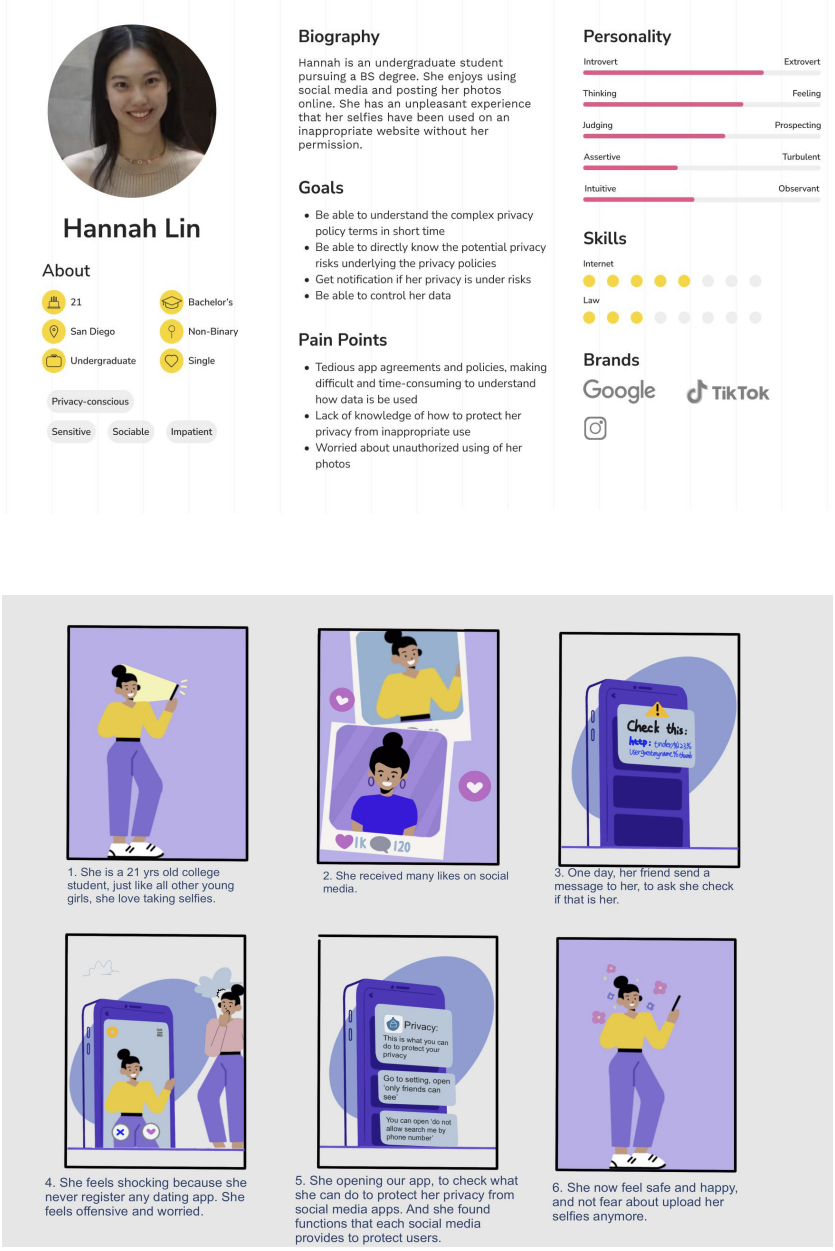
Hannah Lin is one of our primary user, she is a college student who likes to post selfies in social media. One day, Lin saw her photo in a dating app but she never used it before. After that, she opened our app and learned how to protect her privacy.
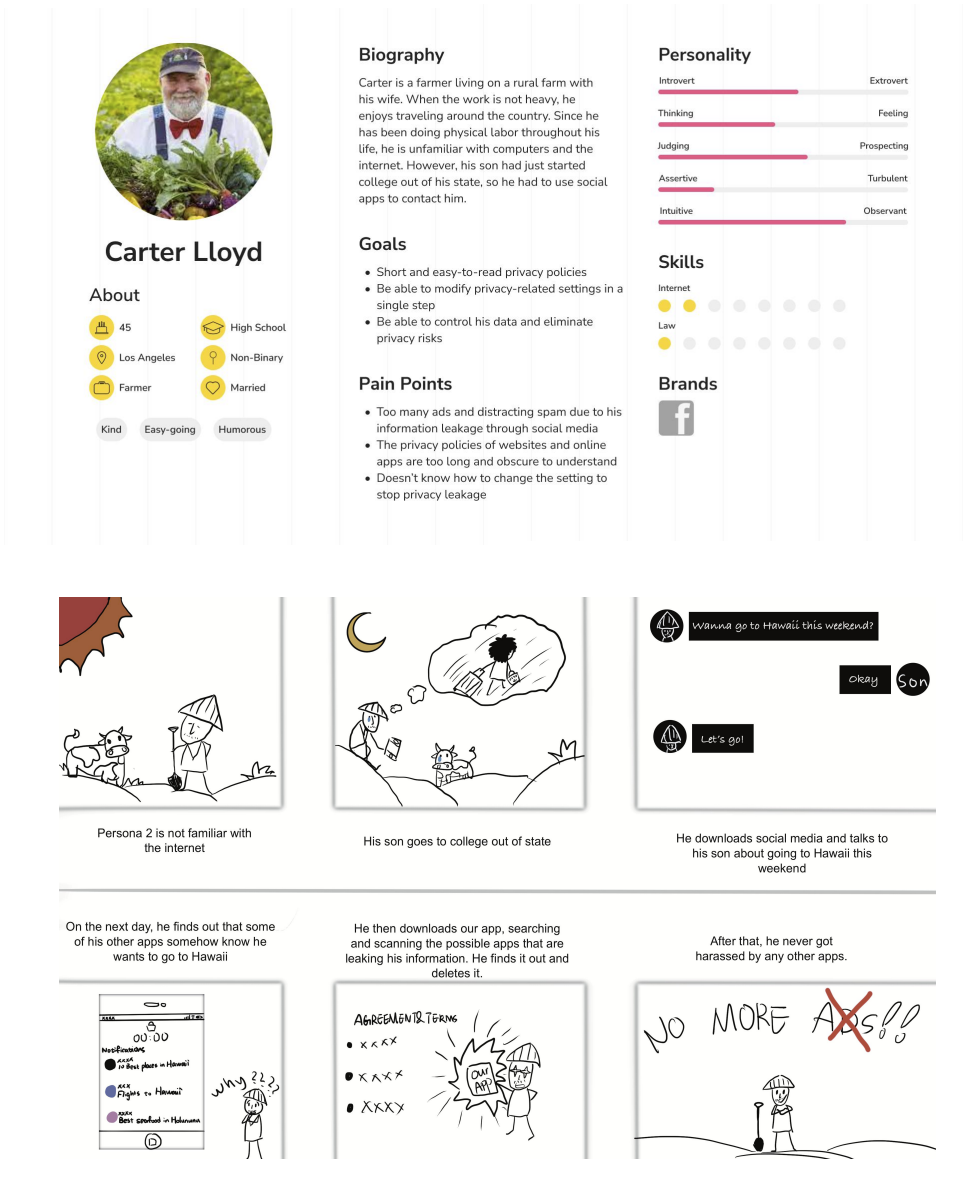
Carter Lloyd is the other primary user, he is a farmer, he has a son who just started college out of the state, so he has to use social apps to contact him but he is not familiar with internet. One day, he chatted with his son on social media about going to Hawaii this weekend, then no the next day, he found out information about Hawaii in other apps. So he downloaded our app and protected his privacy by learning which apps leaked his information.
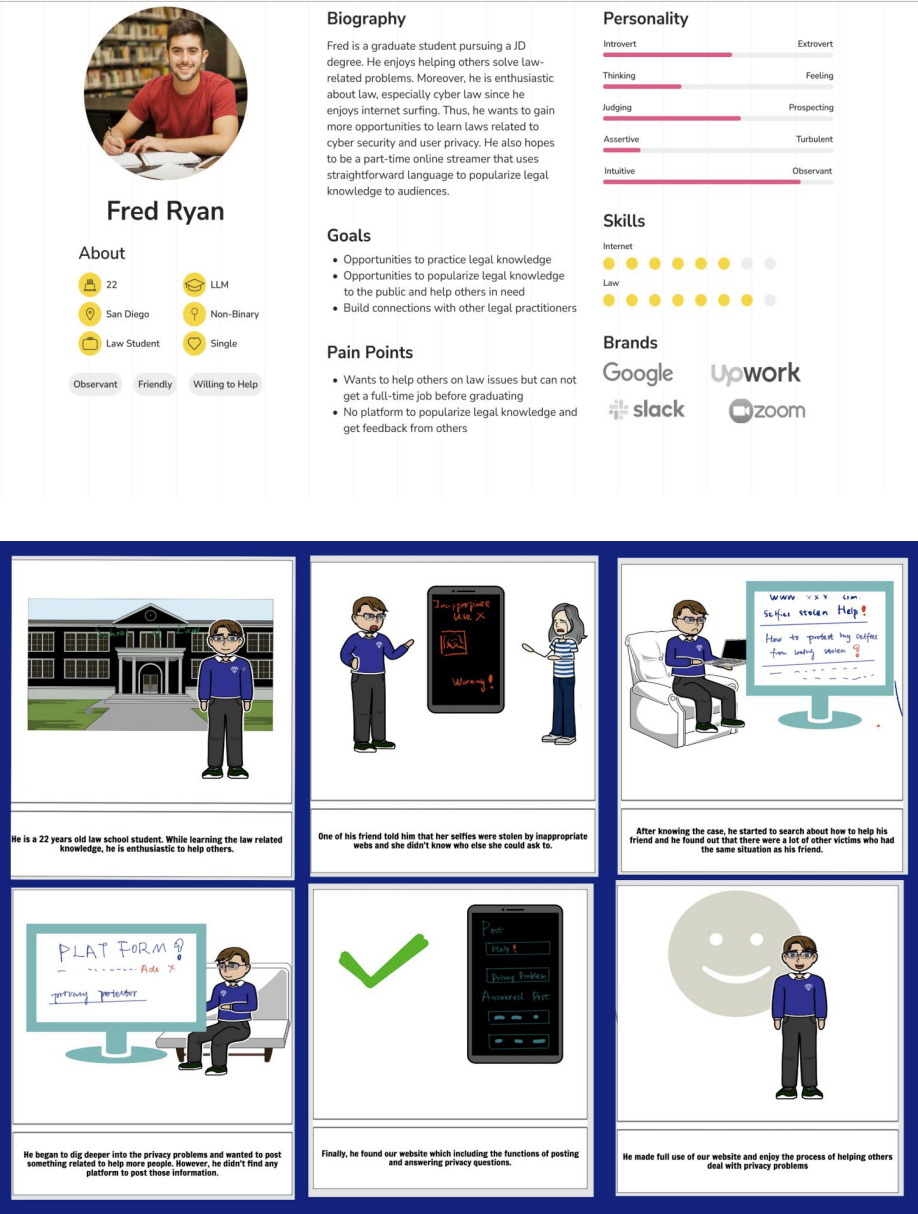
Fred Ryan is the secondary user, he is a graduate student pursuing a JD degree, and he wants to gain more experiences related to user privacy. One day, his friend asked him for help because her selfies were stolen by inappropriate websites. Then, he searched on about how to help her, and he found out there were lots of people who were struggling with privacy issues. So he downloaded our app, and he used this platform to help people who have privacy-related problems.
Our Advantages:
1. Improve the visualization
2. Community features
3. Automatic detect privacy issues
4. Summarize user cookies
5. Provide list for privacy concerns
Link to full document:
https://tinyurl.com/2p8b2k87

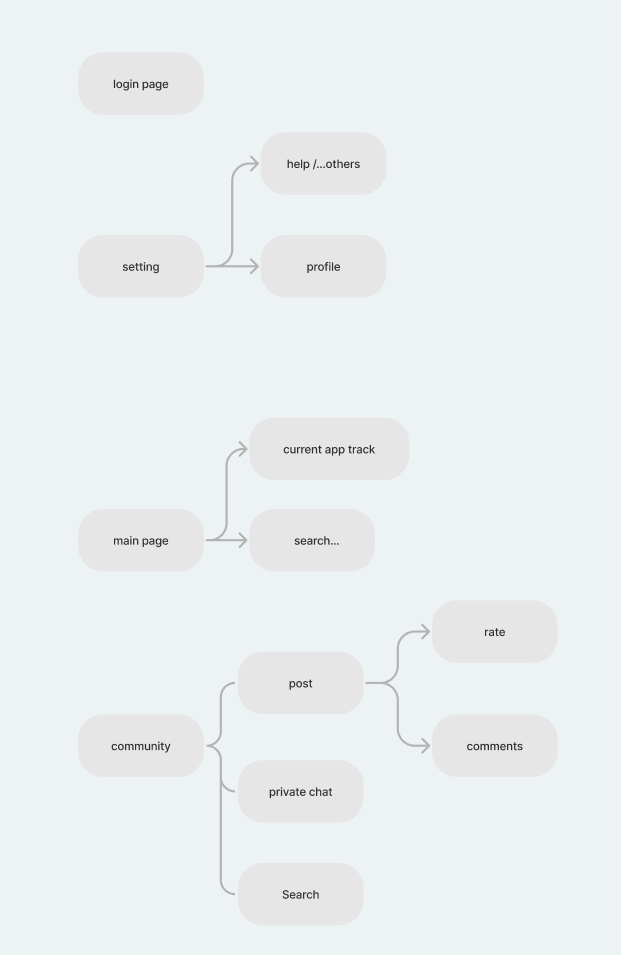
We brainstorm about our general user flow before we start to prototype


Once the low-fidelity prototype for PriAid has been designed, we invite eight distinct users to test the two flows of the prototype and record their feedback for future reference.
Flow 1:
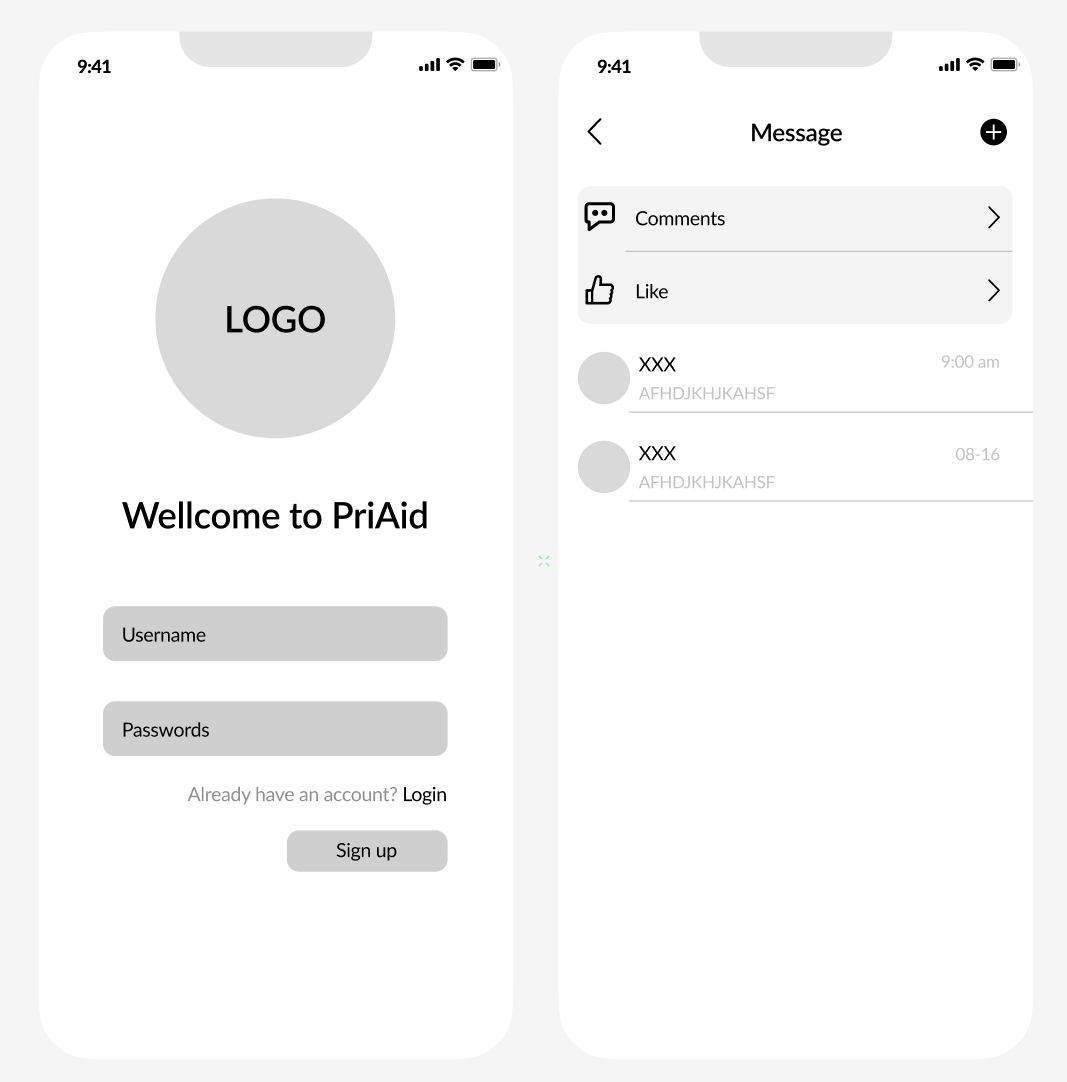
1. Task1: sign up to see the main page.
2. Task 2: view the risks in the current app.
3. Task 3: see entire simplified agreements → accept the first solutions.
4. Task 4: go to community page.
5. Task 5: turn off/on the scan mode.
Flow 2:
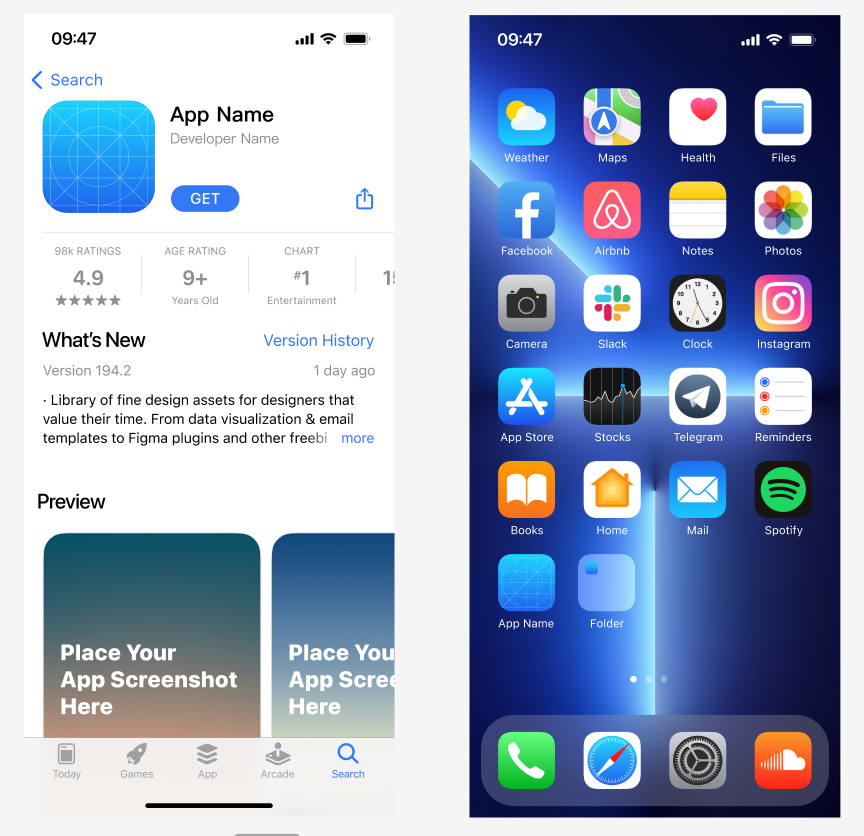
1. Task 1: download a new app—> open the app.
2. See the detailed scanned risks.
Flow 3:
1. What are your feelings of the app?
2. Is there any confusing buttons or problems when navigating the app?
3. Do you have any suggestions?
4. How do you feel about the community feature?
Overall Feedback & Insights:
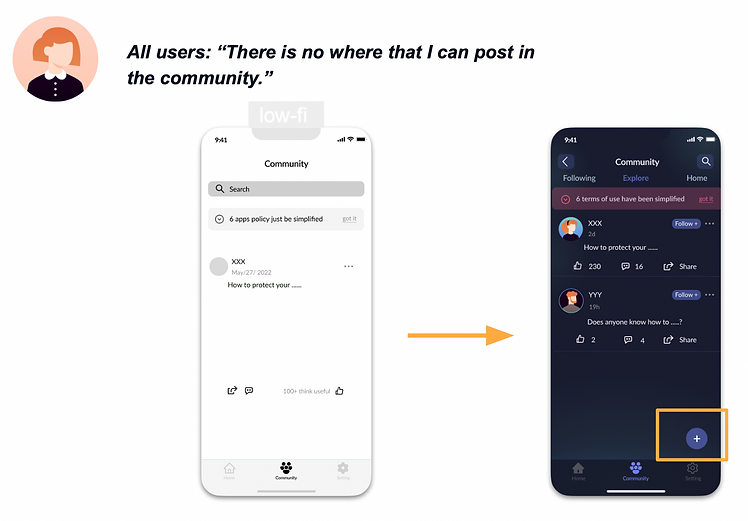
1. Add button to allow users to post in community page
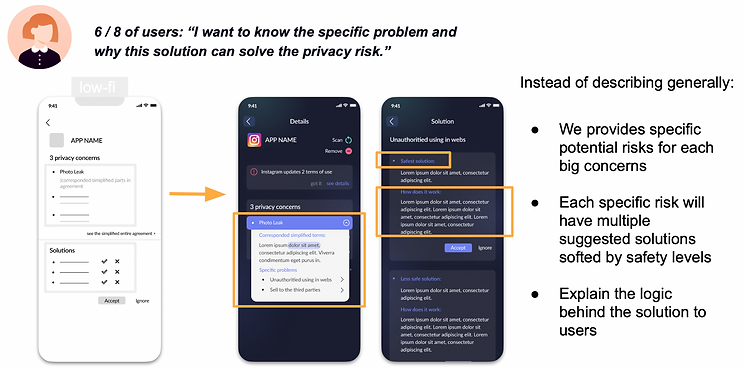
2. Add more details (a page) about how to solve the privacy concerns
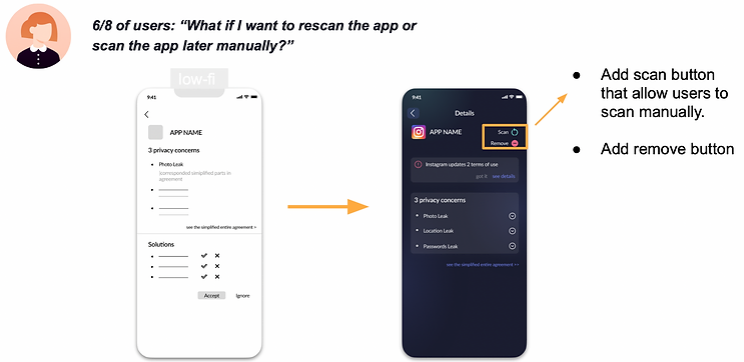
3. Try to think another way to describe scan mode —> add tutorial Scan mode → scan access
4. Add paid functions: like translation features/number or qualities of solutions
5. Add tutorial to guide users (main features)
6. Every possible flow
7. Current apps: scanning button here, users can choose whether to scan right now/remove/add/delete apps
8. Simplified version page at first: different highlight according to different risks concerns
9. Add a notification to notify that “you only accept 1 solution while 2 are left”
10. Separating DM, comments, likes
11. Detailed page of DM
12. The interaction after accepting the solution: scanned risks become 0


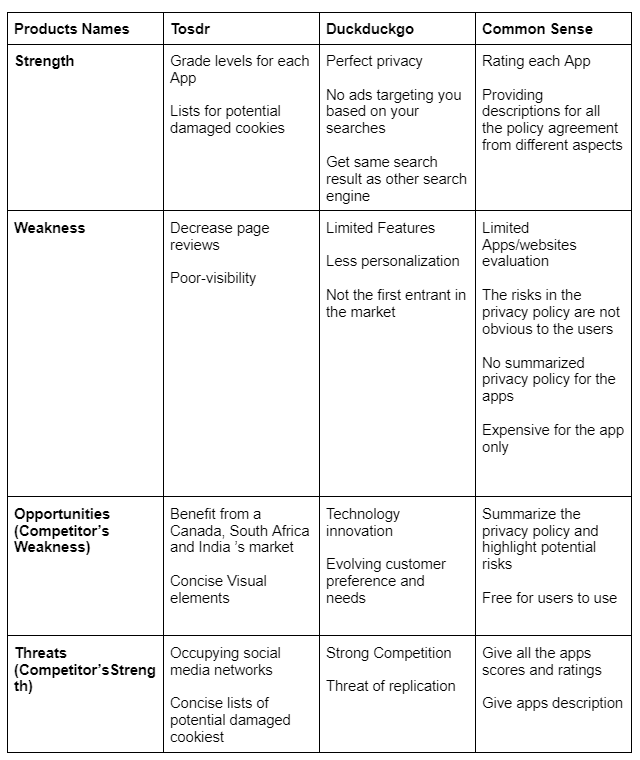
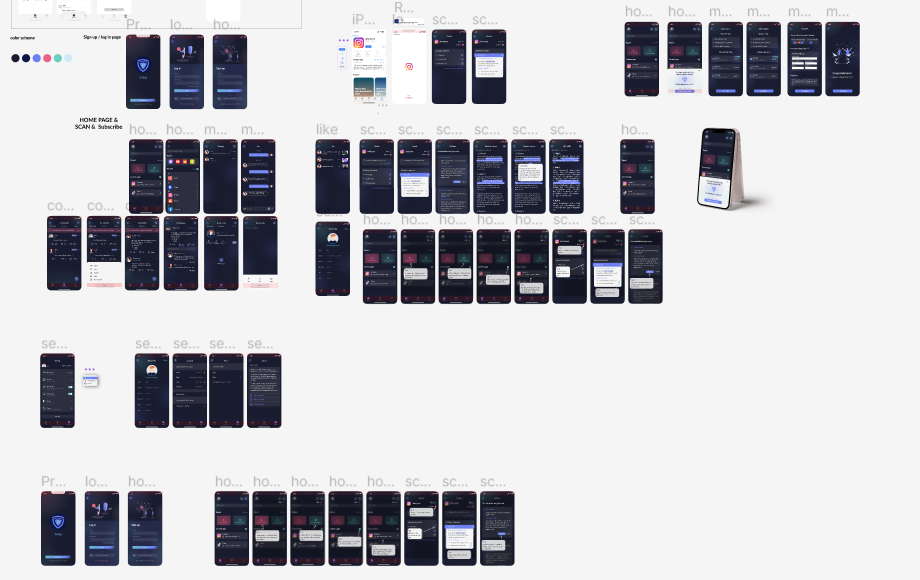
After receiving feedback from 8 different user tests and analyzing our competitors, we have created a high-fidelity prototype for PriAid. This app can scan other apps for potential privacy issues, offer simplified privacy agreements, and provide solutions for specific privacy-related problems at varying levels of safety. Additionally, PriAid includes a supportive community feature that allows users to share posts related to privacy concerns.


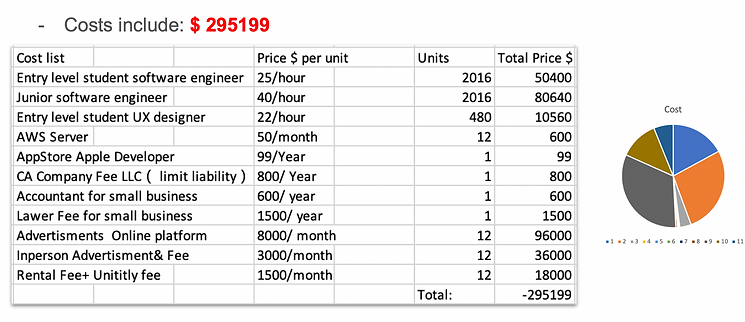
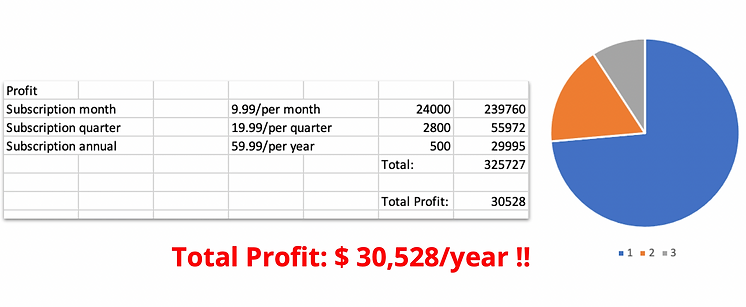
By considering all the costs that will be involved when we develop and operate PriAid, we need about $295,199. PriAid has a membership program, if users join this program, they can scan unlimited apps to know the potential privacy risks in all the apps, they can get unlimited access to solutions to protect their privacy, and they also can use the translation function to help users understand the privacy agreements more easily. The monthly subscription fee is $9.99 per month, the quarterly subscription fee is $19.9 per quarter, and the annually subscription fee is $59.99 per year. Therefore, the total profit is about $30,528 per year.